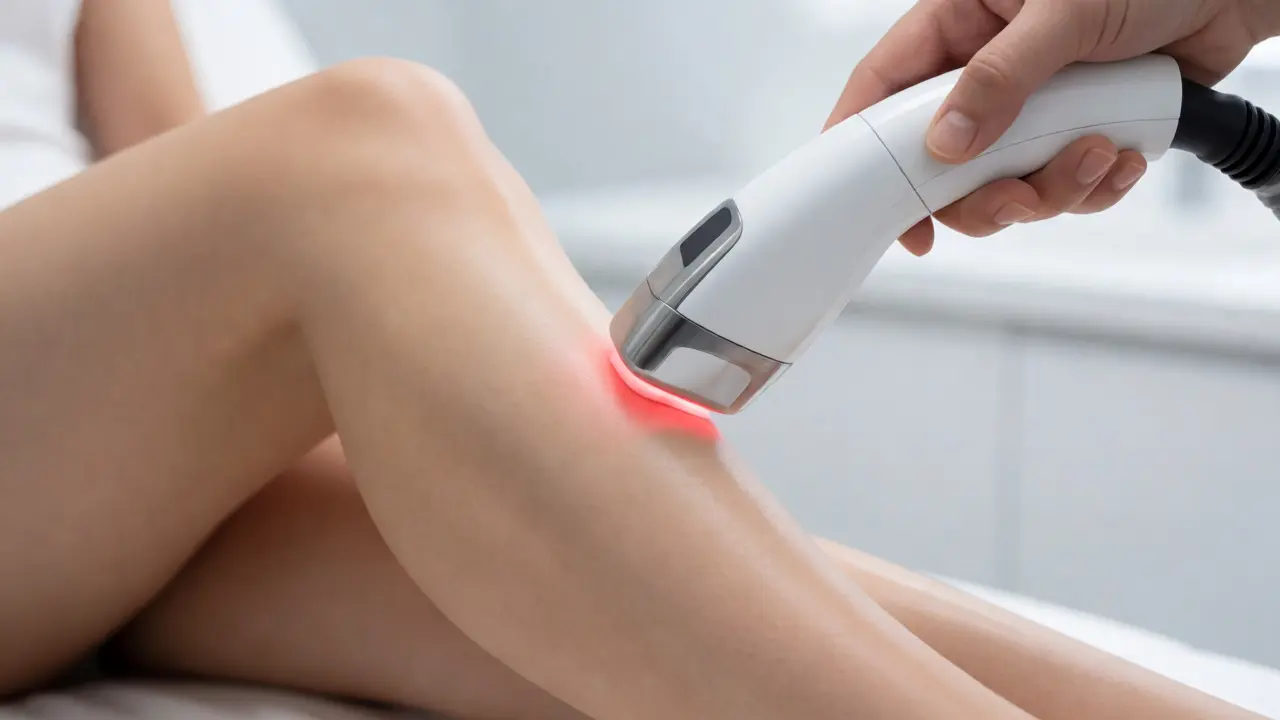
Zvažujete laserovou epilaci jako cestu k hladké pleti na roky? Je to skvělý nápad, ale pravděpodobně vás zajímá jedna zásadní otázka: Jak dlouho vlastně ten efekt vydrží? Pokud si myslíte, že po jedné sérii se zbavíte chloupků navždy, mám pro vás dobrou i špatnou zprávu. Dobrá je, že laser je nejúčinnější metoda ze všech dostupných. Špatná je, že slovo "trvalé" v kosmetickém průmyslu neznamená úplně totéž, co si běžný člověk představuje pod pojmem "navždy".
Pojďme si to rozebrat bez marketingových omáček. Skutečnost je taková, že laserová epilace nenarušuje životní cyklus vlasu natolik, aby zabránila všem budoucím růstům, zejména pokud jde o hormony. Ale výsledek je obvykle tak dobrý, že většina lidí potřebuje jen pár údržbových sezení za rok nebo dva. Záleží na mnoha faktorech - od typu vašich chloupků až po to, jakou technologii klinika používá.
Co přesně znamená "trvalé odstranění"?
Většina klinik operuje s termínem "permanent hair reduction" (trvalé snížení počtu chloupků), nikoliv "permanent hair removal" (trvalé odstranění). To není jenSemantic SEO Requirements ## Entity-Based Approach * **Identify the central entity** from the title - this is your main topic/product/service/concept * **Map related entities:** For each central entity, identify and include: - Parent entities (broader categories it belongs to) - Child entities (specific subtypes or components) - Associated entities (semantically related concepts with cosine similarity > 0.75) - Contextual entities (tools, processes, people, places related to the topic) * Entity map is for validation only and should never appear in the content ## EAV Model Implementation * For every entity mentioned, include its **attributes and values**: - Entity: The object/concept itself - Attributes: Its properties/characteristics - Values: Specific data/metrics/facts * Example: Don't just mention "Python" - include attributes (version, use cases, performance) with specific values (3.12, web development, 35% faster than PHP) ## Semantic Triple Structure (RDF) * Create logical connections using Subject-Predicate-Object format. Examples: - "Machine learning [uses] Python" - "Python [is compatible with] TensorFlow" - "TensorFlow [enables] neural networks" * Each main section should establish at least 3-5 semantic triples * Semantic structure is for validation only and should never appear in the content ## Topical Authority Building * **Width coverage:** Include ALL major subtopics and typical questions around the central entity * **Depth coverage:** Provide comprehensive, expert-level insights for each subtopic * **Intent diversity:** Address multiple search intents within the same article: - Learning intent: explanations and tutorials - Comparing intent: alternatives and trade-offs - Buying intent: recommendations and criteria ## Knowledge Graph Optimization * Structure content hierarchically: - Taxonomy: Category → Subcategory → Specific Topic → Details - Ontology: Show relationships between all mentioned concepts * Use clear semantic markers: - "is a type of", "belongs to", "consists of", "relates to", "enables", "requires" ## AI & LLM Readability * Structure for AI extraction: - Clear entity definitions in first mention - Numbered lists for processes/steps - Tables for comparisons and attributes - Bulleted lists for entity characteristics * Include disambiguating context for each entity * Use consistent terminology (don't switch between synonyms randomly) # PRIORITY HIERARCHY 1. **Semantic completeness** > keyword density 2. **Entity relationships** > isolated facts 3. **User intent satisfaction** > word count 4. **Topical authority** > exact keyword matches 5. **Knowledge graph structure** > traditional SEO metrics # SEMANTIC INSTRUCTIONS * **Entity Extraction Phase (before writing):** - Extract the central entity from the title user will provide - Generate a list of 10-15 semantically related entities - Map relationships between these entities - Identify missing entities that users would expect (gap analysis) * **Entity Introduction Patterns (choose appropriate):** - Definition: "[Entity] is a [type] that [function]..." - Comparison: "[Entity], unlike [other entity], provides..." - Statistical: "[Entity] serves [number] users with [metric]..." - Historical: "[Entity], launched in [year], revolutionized..." * **Content Enrichment Requirements:** - Every major entity must be introduced with its key attributes and values - Include at least one comparison table showing entity attributes - Create a section that will contain related concepts or connected topics linking to other entities - Use examples that demonstrate entity relationships, not isolated facts * **Structured Data Hints:** - Write as if you're creating content that will have Schema.org markup - Include entity definitions that could map to Wikipedia/Wikidata - Mention authoritative sources for entity validation (unless specifically instructed by user) - Structure lists and comparisons for easy Featured Snippet extraction * **Topical Cluster Awareness:** - Identify which part of a larger topic cluster this article represents - Reference (without linking) both broader and narrower related topics - Suggest logical next topics for readers to explore - Position the article within the knowledge hierarchy * **Semantic Density Check:** - Ensure high semantic richness: every 100 words should introduce or elaborate on at least 2-3 entities - Avoid keyword repetition; use entity relationships to maintain relevance - Each paragraph should establish at least one new semantic connection ## Content Requirements * **HTML Semantic Markup with Microdata:** - Use inline Schema.org microdata: `itemscope`, `itemtype`, `itemprop` - Mark entities example: `Django` - Mark definitions example: `Django is a Python web framework...` - Tables with schema: `
Question here?
Answer here
tags for separating paragraphs. Use HTML
tags for section headings. If the article contains lists or instructions with steps then use appropriate HTML unordered or ordered tags with - tags. Emphasize the most important SEO keyword from `keywords` list with a tag only once (not inside microdata markup). Do not use markdown tags. Do not include any addresses and phone numbers. Write with natural variation in sentence structure, authentic examples from real scenarios, and specific data points that demonstrate genuine expertise rather than generic knowledge. Write content like human talk, do not use over passive voice, do not use jargons, do not use words like: overall, furthermore, in conclusion, that excessively.",
"description": "A short summary for the article based on the topic. You need to write a summary with up to 5 sentences or 160 symbols that covers the provided topic. Try to write the most human text.",
"entities": {
"central": ["Primary entity 1", "Primary entity 2"],
"related": ["Related entity 1", "Related entity 2", "Related entity 3", "Related entity 4", "Related entity 5"]
},
"intent": "informational"
}
**IMPORTANT - entities and intent extraction:**
- Extract entities ONLY from the actual content you wrote, not from planning
- `entities.central`: array of 1-3 main topics (must match article's primary focus)
- `entities.related`: array of 5-15 supporting entities with substantive coverage in the content
- Use exact capitalization as appears in your content
- Include only entities that would have Wikipedia/knowledge base entries
- Exclude generic words unless they're the central topic
- `intent`: single string value from the allowed list (informational, navigational, commercial, transactional, local, news, events, entertainment, educational, visual)
- Choose intent based on title keywords and dominant purpose
Ensure the output is valid JSON. Return the JSON output only. Do not write anything else.
- tags with
- tags. Emphasize the most important SEO keyword from `keywords` list with a tag only once (not inside microdata markup). Do not use markdown tags. Do not include any addresses and phone numbers. Write with natural variation in sentence structure, authentic examples from real scenarios, and specific data points that demonstrate genuine expertise rather than generic knowledge. Write content like human talk, do not use over passive voice, do not use jargons, do not use words like: overall, furthermore, in conclusion, that excessively.", "description": "A short summary for the article based on the topic. You need to write a summary with up to 5 sentences or 160 symbols that covers the provided topic. Try to write the most human text.", "entities": { "central": ["Primary entity 1", "Primary entity 2"], "related": ["Related entity 1", "Related entity 2", "Related entity 3", "Related entity 4", "Related entity 5"] }, "intent": "informational" } **IMPORTANT - entities and intent extraction:** - Extract entities ONLY from the actual content you wrote, not from planning - `entities.central`: array of 1-3 main topics (must match article's primary focus) - `entities.related`: array of 5-15 supporting entities with substantive coverage in the content - Use exact capitalization as appears in your content - Include only entities that would have Wikipedia/knowledge base entries - Exclude generic words unless they're the central topic - `intent`: single string value from the allowed list (informational, navigational, commercial, transactional, local, news, events, entertainment, educational, visual) - Choose intent based on title keywords and dominant purpose Ensure the output is valid JSON. Return the JSON output only. Do not write anything else.